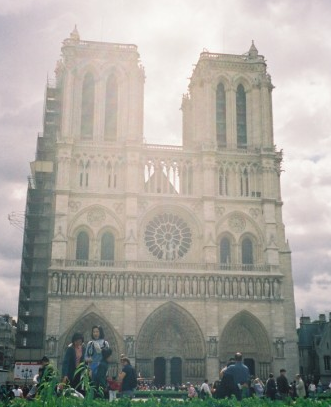
The Middle Ages fashioned summae in stone and stained glass as well as in theology. In the twelfth century a new architecture (what would later be called pejoratively “Gothic” in contrast to the earlier “Roman” style) produced a building out of freedom and synthesis. Sharp arches pointed toward heaven and, since the arches could sustain more weight, the wallspace was free. Some creative personality suggested filling it with windows of red and blue, yellow and green glass. Colored light poured in. The artists with their theological consultants faced in the rose windows of the cathedrals the same questions of multiplicity and order as did the university professors in planning their summary works of theology. Just as light comes from the sun and pours into the church through colored windows, so God passing through the events of salvation-history pours grace into the individual spirit. (O’Meara, Thomas Aquinas: Theologian, p. 47)
Medieval Architecture and the Summae: Theology’s Aesthetic Counterpart

One response to “Medieval Architecture and the Summae: Theology’s Aesthetic Counterpart”
-
I remember reading this a while back and forgot to tell you that I love medieval architecture.

 EPISTOLÊ