The Reformers were not iconoclasts simpliciter. Vermigli believed that images should be used for the education of the laity, the only exception being the use of images during the liturgy. Also, Peter Matheson notes that via a humanistic education that exalted the art of rhetoric, the Reformers learned to use the pen as a paint brush to paint images upon the mind through eloquent and ornate speech. Another example of a Reformed use of images is the Zwinglibibel. This is the BIble translated into Swiss-German by Zwingli et alia in 1531. The Bible was full of images of significant persons, events, and even divine beings. For instance, the following is a print of the “Son of Man” from John’s Revelation:
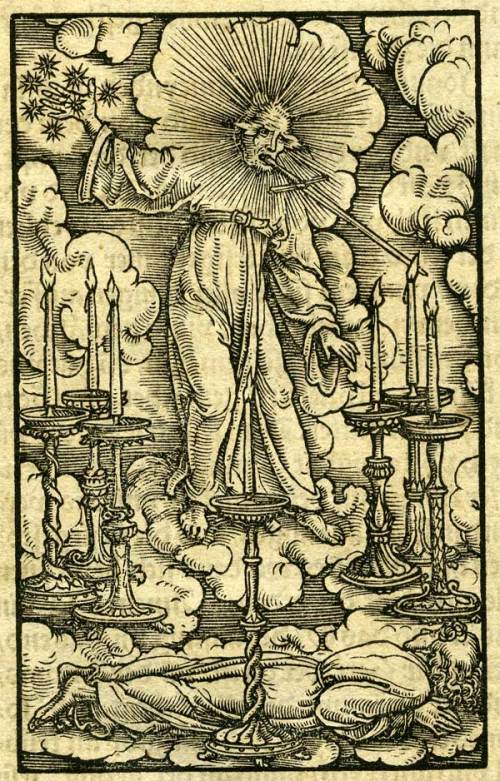
Types like Karlstadt and many later Puritans would not have appreciated the insertion of images in to God’s Holy Word but Zwingli found it useful and necessary for the education of a mostly illiterate laity. The images were designed smaller so as not to distract the reader from the text, yet they were large enough and detailed in order to instruct the reader in the correct interpretation of the text.


 EPISTOLÊ