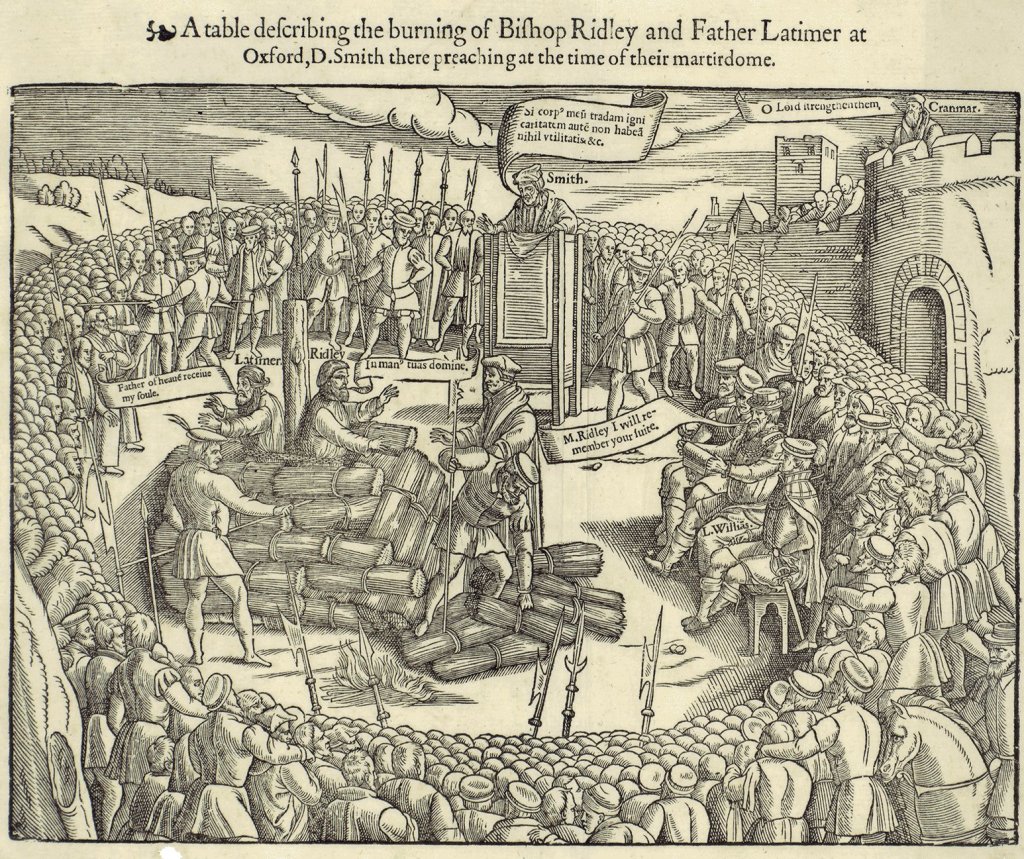
On St. Stephen’s Day in 1552 Bishop Hugh Latimer preached one of his final homilies. Like the great protomartyr, Latimer himself would win a martyr’s crown just a few years after this. The following excerpt is taken from this homily. Of note is the custom, apparently still practiced in 1552, of bowing or kneeling at the phrase “He was made man” during the reading of the Gospel on Christmas Day. One also notes how St. Stephen’s Day is clearly regarded as a continuation of the Christmas feast day, as the propers for St. Stphen’s, St. John’s, and Holy Innocents Day (or Childermas) are couched within the Christmastide propers in the Book of Common Prayer.
This day on which our Saviour was come into the world, we were made one flesh with the Son of God. O what a great honour is this unto us! which honour exceedeth the dignity of the angels. For though the angels are better in substance, yet we are better in the benefit; for Christ took not upon him the nature of angels, but he took our nature upon him, man’s nature, I say. Oh what an exceeding thing is this! Oh how much are we bound to give him thanks for these his profound and inestimable benefits!
Bp. Hugh Latimer, Homily on St. Stephen’s Day 1552
We read a story, take it as you will, though it is not a true story: The devil came once into a church while the priest was saying mass, and when he was at these words, ‘Et homo factus est, He was made man,’ the devil looked about him, and seeing no man kneel down or bow his knees, he strake one of them in the face, saying, ‘What? will you not reverence him for this great benefit which he hath done unto you? I tell you, if he had taken upon him our nature, as he hath taken upon him yours, we would more reverence him than you do.’ This story is prettily devised, for we should reverence him, we should honour him, and show ourselves thankful for those inestimable benefits that he hath showed unto us miserable wretched sinners, in taking upon him our nature.

 EPISTOLÊ