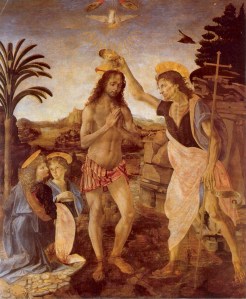
Peter Martyr’s philosophy of images in worship is a portrayal of the typical Reformed view. He cites Epiphanious and Jerome as church fathers who agree with his position, that images should not be used in worship because men are already inclined toward idolatry. Images provoke the senses, and because of that they are less profitable than those sources that lift up our minds to contemplation. On the other hand, Vermigli does not disallow images of Christ and the apostles, so long as they are confined to the economic sphere.
Wherefore, my opinion is, that images oughte utterly to be removed out of holy temples. But in other places there may be some use of them. At the least, they may bring an honest pleasure, which may have some utilitie ioyned with it, if they represent those thinges whiche are monuments and examples of pietie. But they are in no case to be suffered, no not in other places also, if they shoulde become occasions of idolatrye. For then must we always imitate Ezechias. Neither ought we at any tyme to attribute more unto them, then unto the holy scriptures. For who falleth downe uppon hys knees, and worhippeth the booke eyther of the new Testament or of the olde? None undoubtedly, which is godly wise. And yet in them both, Christ and also the workes of God are more truely and expressedly set forth unto us to contemplate, than they are in all the images of the world. Neither is this to be passed over, that the maner of having images came unto us rather from the Ethnikes, then from the practice of holy men. (Peter Martyr Vermigli, Commentary upon the Epistle to the Romanes, p. 32.)
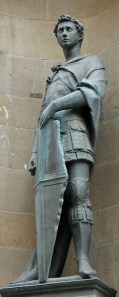
He continues to give two principles that the pious Christian should follow when seeking artwork for use within the sphere of the home or school:
And also if we have images privately, two other thinges also ought diligently to be taken hede of. First, that they be not lying images, so that under the title and name of sayntes, they represent not those which ever were extant. Suche as are the signes of George, of Christopher, of Barbara, and of such lyke, which are by images and pictures obtruded as sayntes, when as there is nothyng found, of certainty touching them. Nowbeit, I deny not, but that some things may sometimes be painted, which may by an allegoricall signification profitably enstructe the beholders. Farther, we must beware that the pictures or tables be not filthy or wanton, wherewyth to delyght our selves, lest by the syght of them, should be provoked wicked lustes. (Ibid.)
As usual, Martyr’s discussion on this topic is a bit more moderate than some of the more iconoclastic Reformed divines who came after him. Yet, such stricture will always seem a bit authoritarian for our modern sensibilities. Vermigli and Calvin both hold to a much lower view of the senses than we are used to. Calvin even castigates the use of the imagination in general, an idea that receives a more moderate treatment by Vermigli. But, the somewhat iconoclastic spirit of the Reformers should not be taken out of context, as we often do. Here, Vermigli gives a more moderate view. The imagination was created good, and so long as it does not lead us to idolatry or over indulgence then religious images are permissible, outside of the church.


 EPISTOLÊ